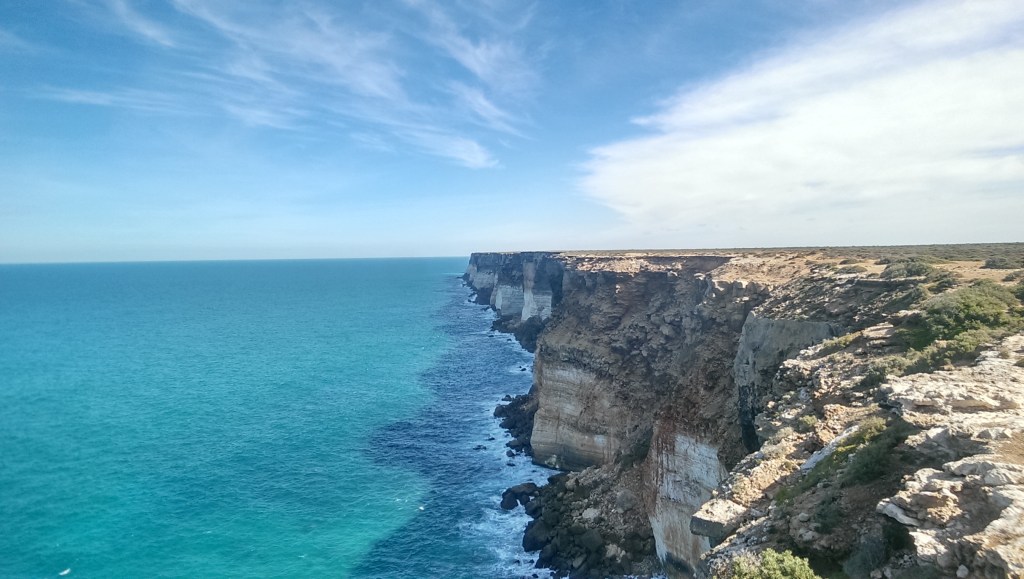
Australia is on the verge of approving oil drilling in Australia’s other great reef, the Great Australian Bight (GAB), an ecologically important region spanning Esperance (Western Australia) to Cape Catastrophe (South Australia).
The Bight is an incredibly productive ecosystem. Upwellings bring immense nutrients that support small pelagic fishes like sardines and anchovies, which help support 37 species of marine mammals. The most iconic is the Southern right whale, which breeds and calves here, but is “endangered” and “vulnerable to extinction”. The Bight also supports 72 of Australia’s 110 coastal bird species, over 600 identified invertebrate species, and approximately 300 fish species – Southern bluefin tuna and great white sharks migrate through seasonally. Collectively, these marine species not only support overall ecosystem health and diversity but also promote a flourishing and sustainable eco-tourism industry ($1.2 billion per annum) in the Bight and are important socially and culturally.
Plans to proceed with deep-water drilling by the Norwegian company Equinor (formerly known as Statoil) have raised the spectre of a possible oil spill potentially reaching as far as coastal Tasmania and even Sydney’s Bondi Beach, according to the company’s own disaster modelling. This follows unprecedented back-to-back years (2016 and 2017) of coral bleaching due to ocean warming – directly related to fossil fuel emissions into the atmosphere – that wiped out nearly two thirds of the Great Barrier Reef.
So, not only are we are considering continued reliance on fossil fuels with this drilling project, but we are also targeting another biodiverse, yet, sensitive ecosystem off of the Australian coast as the backdrop.
We already know ocean warming reduces the fitness of many marine species. And, consequences are already in play, including the biogeographic shuffling of hundreds of species in Australian waters. But as we also know from the 2010 BP Deepwater Horizon oil spill – the most detrimental in U.S. history – when you drill for oil deep into the oceans, accidents happen.
Crude oil was first shown to cause developmental defects in marine organisms following the 1989 Exxon Valdez spill in Alaska, USA, a region that still, after 30 years has not recovered. We now know, after research conducted in the Gulf of Mexico after the BP spill and from studies done on Great Barrier Reef fishes, it doesn’t have to be a catastrophic oil spill to affect marine ecosystems. Concentrations as small as a few drops in an Olympic-sized swimming pool can alter key developmental pathways for fishes like cod, tuna, kingfish, and mahi mahi. Such sub-lethal concentrations can also cause cardiac, spinal and craniofacial deformities and impact behaviours such as predator evasion and food attainment.
In addition to the effects of oil, noise from the boat traffic, drilling, seismic surveys, and the increased sediment loads in the waters would also have detrimental impacts on fish development, gill health and function, swimming performance, and overall energy use. Most marine organisms use sound to navigate and locate mates, habitat, and food. The persistent sound produced during these surveys diminishes the ability of these animals to use these important auditory cues, which impacts the fitness of marine populations.
What is the message we are sending to our fellow Australians and the rest of the world in terms of our policy on protecting and conserving natural resources, biodiversity, and the environment if we initiate new fossil fuel projects?
We have no chance, as a global community, of staying below the 1.5°C warming scenarios decided upon as part of the Paris Agreement made at the 21st Conference of the Parties (COP21) by doing so. The benefits cannot possibly outweigh the risks.
We can and must do better.
Dr. Jodie L. Rummer – Associate Professor and Principal Research Fellow
ARC Centre of Excellence for Coral Reef Studies
James Cook University
Townsville, QLD Australia
Dr. Bridie J. M. Allan – Lecturer
Department of Marine Science
University of Otago
Dunedin, New Zealand

 Puzzle Creek Press