Who are victims of genocide? When you initially consider genocide, what leaps to mind are atrocities levelled against ‘people’ due to race, religious affiliation and at a stretch disability. But our outrage is rarely reserved for drug users. There is a reason. The Universal Declaration of Human Rights by United Nations does not provide protections for drug users (1), nor does Australia’s Anti-discrimination Laws (2). This is a group resides outside human rights protections, existing in legal frameworks as criminals.
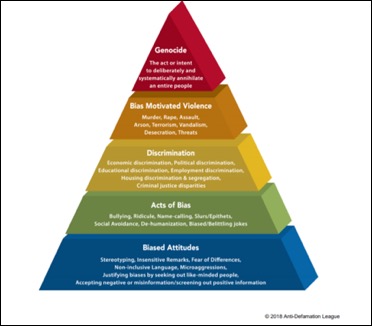
Drug use, drug dependency, drug misuse, drug abuse, drug addiction, addicts, junkie scum, criminal, a ‘war on drugs’. It’s worth noting that not one of the definitions above reference that a ‘person’ is engaging in a behaviour. It is this easy to commence the climb of the “Pyramid of Hate”(3), through dehumanising and stereotyping. When you think and discuss drug use, what terminology peppers your thinking? What stereotype comes to mind?
4
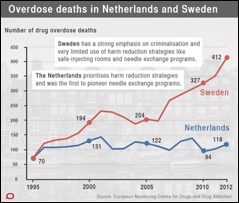
In Australia, research shows that 80% of people who inject drugs report having experienced stigma and discrimination in their interactions with the health sector (5). It was demonstrated, with appropriate training, health professionals can reduce the experience of perceived discrimination (6). This proves that discrimination against drug users within the health sector is real and not a figment of a drug distorted mind. Further, the approach a country takes in constructing their medical models and care of people who use drugs, directly impact mortality rates. This can be seen in the comparison of two similar European counties, Sweden and the Netherlands (7).
The ramifications of Sweden’s focus on criminalisation is mortality rates greater than three times what is occurring in the Netherlands. This demonstrates how quickly we can escalate from biased attitudes, to deadly forms of discrimination.
8
Internationally we are seeing surging acts of state sanctioned violence and genocide against people who use drugs. This is occurring in Philippines, geographically next door. During Rodrigo Duterte campaign to become President he promised to extend his regional ‘war on drugs’ in Davao City to a national level (9). He stated, “you drug pushers, holdup men, and do-nothings, you better get out because I’ll kill you (10).” Duterte became President on 1st July 2016 at which time he told the general public “If you know of any addicts, go ahead and kill them yourself’ (11). This mandate has resulted in 7025 official deaths between 1st July 2016 and 30 January 2017 as reported by the Philippine Police Force (12). An estimate by Human Rights Watch is closer to 12,000 people, coming from the poorest areas (13). This ‘war on crime’ (14) created by President Rodrigo Duterte continues into the present and he promised to continue until 2022 (15).
These directives by the President, combined with organised state sanctioned death squads, bounty rewards, kill lists, mass incarcerations for mandatory treatment and his intention to continue meet seven of the eight criteria for genocide as defined by Genocide Watch (16). These methods are now being adopted by other countries, with Sri Lanka shortlisting their hiring of hang men to tackle their ‘war on drugs’ (17).
Maybe the horror of proliferating genocide has shaken up the United Nations. As they released a policy statement in January recommending decriminalisation of drug possession for personal use (18).
Yvonne Samuel
Harm Reductionist and Advocate for people who use drugs

 Puzzle Creek Press